
Writing in Community Helps You Sound More Like Yourself
A word about The Habit's Writer Development Cohorts
A few years ago, the writer Elizabeth Harwell wrote something on The Habit forums that I sort of knew but didn’t know how to put into words. She wrote, “I’m always amazed at how writing in community somehow helps me to sound more like myself.” It’s a paradox, this idea that we need to be connected to others in order to be more fully ourselves. I say it’s a paradox, but if you’ve ever been a human being, you know it’s true.
It’s tempting to think of writing as a solitary act of will: you find an empty room, you shut the door, you hope somehow to say something that sounds original. But most of us need help knowing what feels original and interesting to the reader. The last time I ran a Writer Development Cohort, one of the writers mentioned in an off-hand way that she had face-blindness: she couldn’t tell one person’s face from another person’s face. It was a throw-away line in a personal narrative about something else that she thought was more important. But everybody in her cohort wanted to know more about the face-blindness. This writer had learned to to cope with that particular challenge decades ago. To her, dealing with face-blindness was just everyday life. To the rest of us, it was an astonishment to consider that a person could navigate the world without being able to tell one acquaintance from another. Once we convinced her that her everyday reality was fascinating to the rest of us, she ended up writing a personal essay that nobody else could have written.

It’s surprising how often some version of that scenario happens in my Writer Development Cohorts. Writers share their work with other writers who are paying attention, and they say, “Right there! That’s where you’re giving me something I couldn’t have gotten for myself.” Which is to say, “That’s where you sound most like yourself. That’s where you have more to give than you knew.”
Giving readers something they couldn’t get for themselves: that idea is at the heart of our approach at The Habit. Very often it’s hard to see for yourself what is surprising or compelling about your vision, your experience. But once you see it (often with the help of generous partners), you’re off to the races.
You’re probably not short on material. But you might need to provide yourself with the conditions that will make it easier you to start getting that material on the page—a little structure, a little pressure of the kind that loves you, a few people who take the work seriously enough that you finally start to take it seriously yourself.
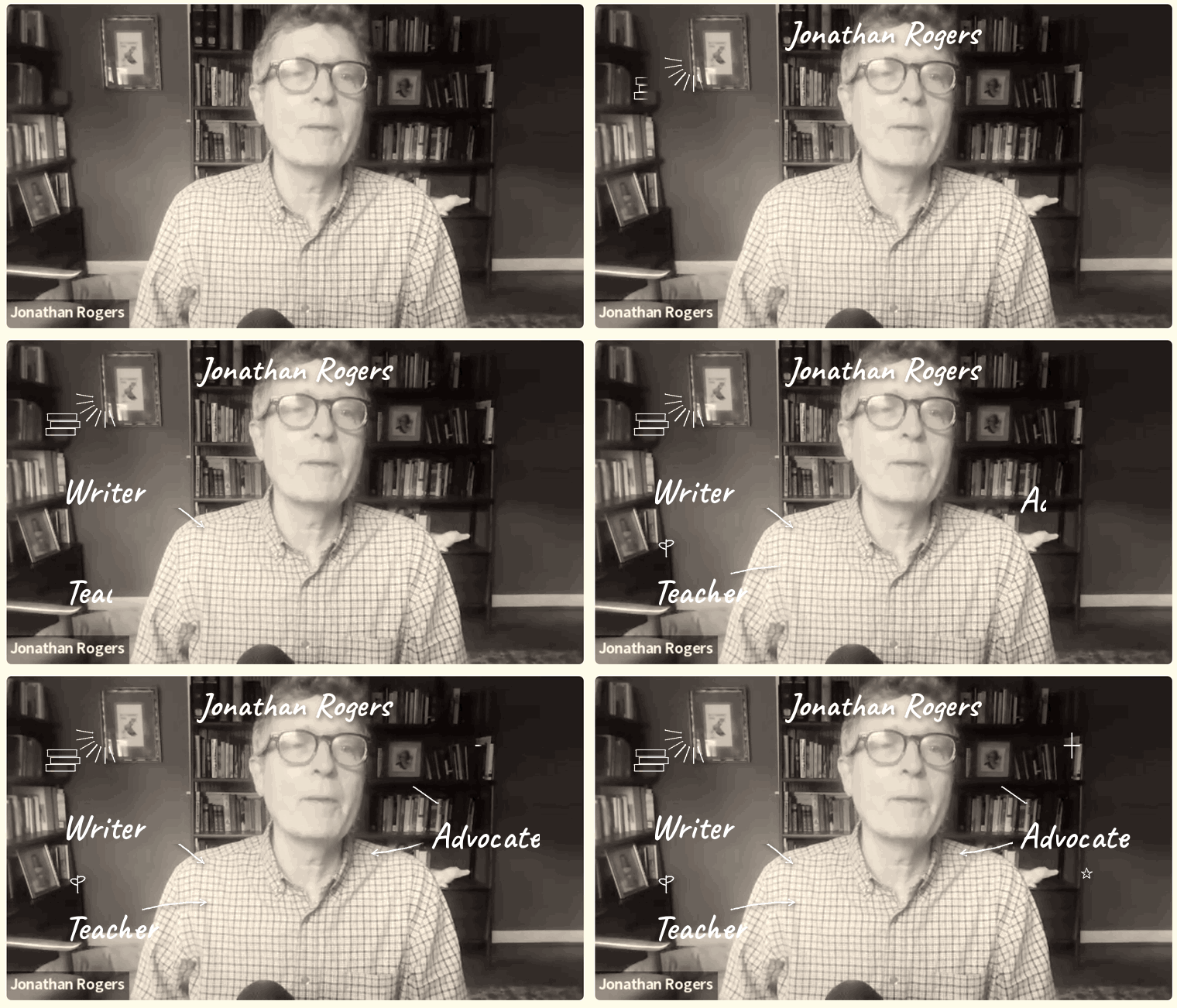
In the Writer Development Cohorts we’re not trying to teach you to write like me, or your cohort leader or whichever writers are currently in fashion. We’re here to help you sound more like yourself. I’m really proud of what we’ve been doing in the cohorts over the last year. They bring out the best in writers, helping them discover they had a lot more to say than they thought they did.
You’ll spend the first half of the Writer Development Cohort expanding out and out, trying new ideas, writing scenes and paragraphs that might get thrown away or might turn out to be doors to whole new rooms you didn’t know were there. I ask cohort participants to hold things very loosely those first three weeks, to be open to the possibility that they don’t yet know what they are there to write. (The cohorts are not designed for putting the finishing touches on a piece that is mostly locked down.) Toward the end of Week 3, you’ll stop expanding and start narrowing back down, organizing and reorganizing around the best, most surprising ideas that came out in the expansion phase.
Each of the six weeks starts with an hour or less of pre-recorded lectures (by me) that you watch at your own convenience. Some of these lectures are about the mindset of the writer, and some are more technical, focused on the actual craft. Early in the week we meet on Zoom for a real-time discussion of that week’s lectures and writing exercises. Midweek I make myself available for “office hours” on Zoom each week so you can ask whatever questions you might have and I can provide whatever guidance I can. There will also be one other meeting each week, whether that’s a one-on-one with a mentor I have trained (Weeks 2 and 4) or a brainstorming session with your eight-person cohort (Week 3), or a workshop meeting (Weeks 5 and 6). Most days there’s an optional “virtual writing room” you can slip into–not to talk about writing, but to do it, quietly, next to people who get it.
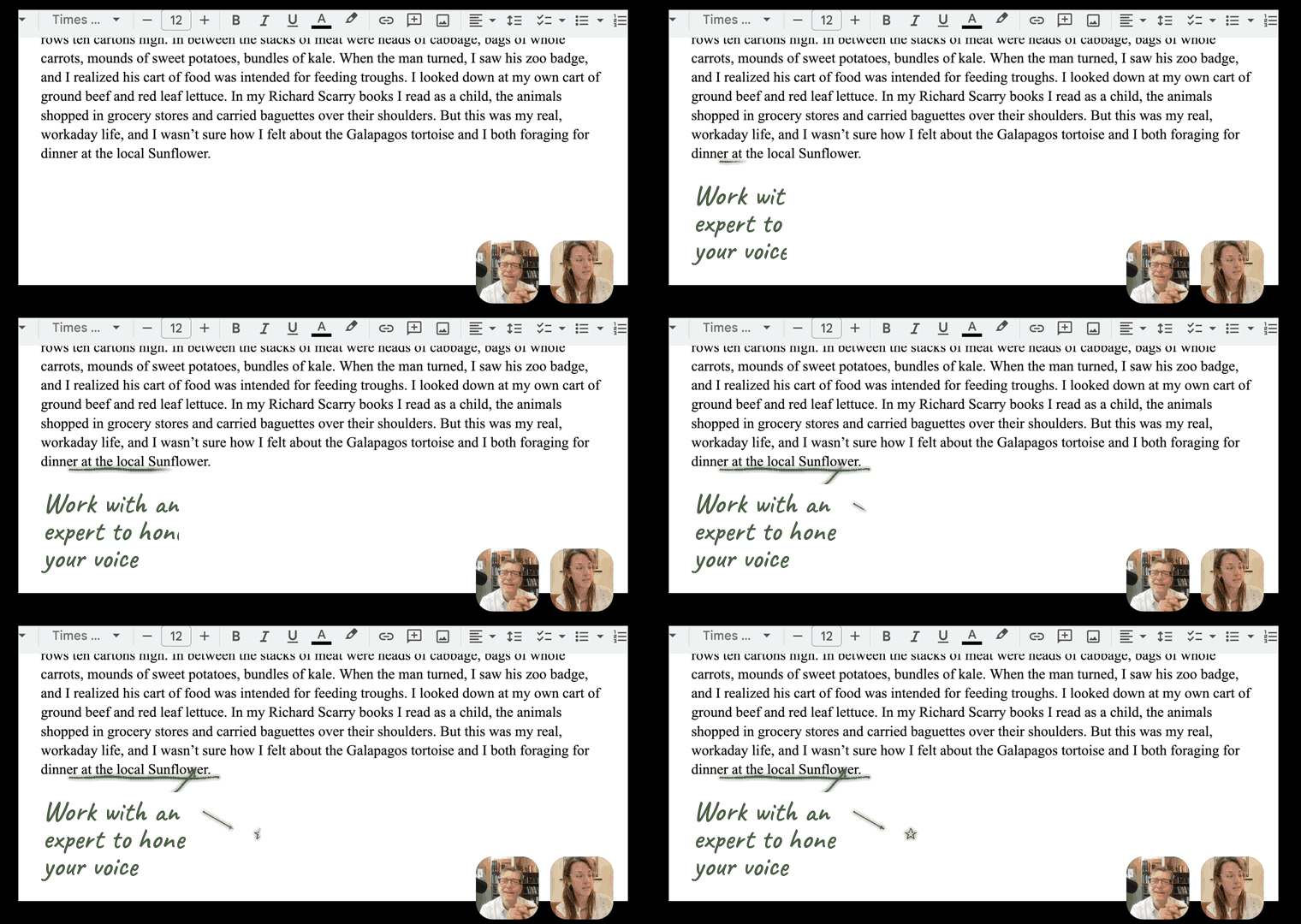
I mentioned the workshop meetings in Weeks 5 and 6. Those are pretty special and a little draining, in the best possible way. You’ll read your colleagues’ pieces as closely as you’d want yours read, and they’ll do the same for you, and you all meet to exchange your feedback, led by your group mentor. (We have a specific method for providing useful feedback, so you don’t need to be daunted by that.) One of the most surprising things about the cohort process is how much you learn and grow by reading and responding to your colleagues’ work.
Also included is my forty-two-lesson Grammar for Writers course to dip into (you won’t have time or space to do the whole course, but it’s a helpful reference for specific sentence-level craft issues), as well as a full year’s subscription to The Habit Membership when the six weeks are done. And, of course, you’ll have a polished essay, story, or chapter — and the eight-or-so writing friends who watched it come into being. The lonely-artist business is mostly a myth, and not a very useful one. We writers need each other.
Whether you’re just starting out, coming back after a long time away, or looking to take your craft to the next level, we’ll meet you where you are in The Habit’s Writer Development Cohorts.
A few more particulars: cohorts run July 13 through August 20. There will be two or three cohorts of no more than eight writers each–separate cohorts for fiction and nonfiction writers. Tuition is $1,495, or $1,295 if you’re already a Habit member. Because the groups are small and because it’s important to me that this be a great experience for everybody, there’s a short application and then a quick Zoom “interview” in which we talk over what you’re hoping to write and we discern together whether this is a good fit and whether now is the right time. Applications close June 23.
If any of this stirs something in you, I’d love to read your application.
The work is hard; it’s supposed to be. As I often say, the only way to the good stuff is through the less-good stuff. Let’s go through it together.
Best,
JR